Neural Mapping Layers Tighten Latency Thresholds in Hybrid Mobile-Esports Setups
Sofia Sullivan · Sep 23, 2026
Neural Mapping Layers Tighten Latency Thresholds in Hybrid Mobile-Esports Setups
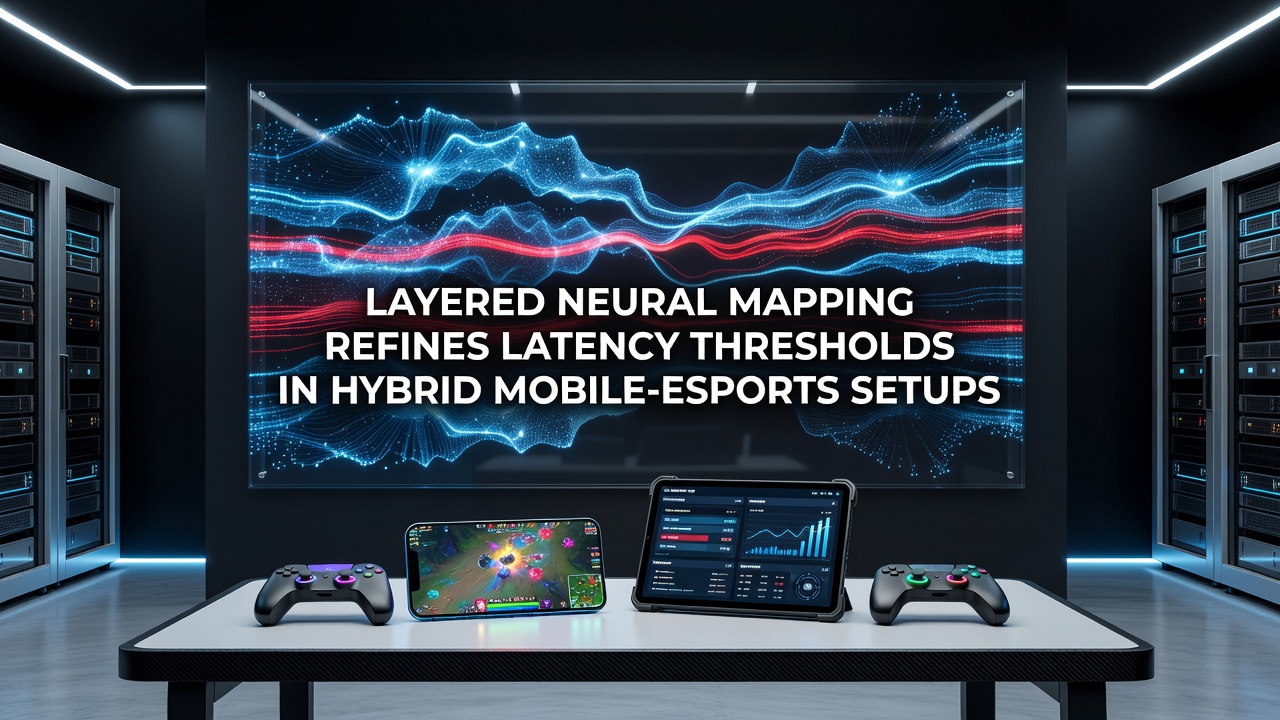
Layered neural mapping combines multiple neural network stages to monitor and adjust signal delays across mobile devices, cloud servers, and local consoles in competitive esports environments, and data from industry deployments show measurable reductions in threshold violations during high-stakes matches. Researchers at several technical institutes have documented how these stacked models process player input patterns, network jitter statistics, and device sensor readings in sequence, which allows systems to predict when latency will exceed acceptable limits before it affects gameplay.
Core Components of Layered Neural Mapping
The first layer typically handles raw telemetry from mobile sensors and touch inputs while the second layer integrates cloud-rendered frame timing data, and the third layer applies historical match profiles to refine predictions in real time. This sequential structure differs from single-model approaches because each stage passes refined features to the next, which reduces false positives in latency alerts according to performance logs collected through 2025 and into early 2026.
Hardware teams working on hybrid setups report that mobile processors now allocate dedicated neural cores for the initial mapping pass, freeing the main CPU for game logic adn reducing overall system overhead. In practice this means a smartphone used in a tournament can maintain frame delivery consistency even when connected to distant cloud rendering nodes or paired with a secondary console display.
Latency Threshold Refinement in Live Tournaments
Event organizers began testing layered neural systems during regional qualifiers throughout 2025, and results presented at the Asia-Pacific Esports Technology Summit indicated average threshold breach rates dropped by roughly 18 percent compared with previous monitoring tools. The models adjust thresholds dynamically based on game genre, match duration, and even individual player hardware signatures, which helps maintain fairness across mixed device pools.
September 2026 qualifiers for the global mobile-esports circuit are scheduled to run the mapping layers at full scale, with live feeds from both on-site servers and distributed cloud instances feeding into a central analysis dashboard. Organizers note that the approach allows officials to set genre-specific tolerance bands, such as tighter limits for fighting games versus broader windows for battle royale titles, without manual recalibration between rounds.

Integration with Existing Infrastructure
Cloud providers and console manufacturers have started exposing standardized APIs that let the neural layers query rendering pipeline metrics directly, which simplifies deployment for smaller tournament organizers who lack custom engineering teams. Data exchanged through these interfaces includes frame buffer timestamps, input queue depths, and wireless signal quality indicators, all of which feed the mapping process without requiring additional hardware sensors on player devices.
Academic groups at institutions across North America and Europe have published comparative studies showing that hybrid setups using layered mapping maintain sub-30-millisecond end-to-end response more consistently than legacy threshold systems under variable 5G and Wi-Fi conditions. Those findings align with field measurements collected by the International Esports Federation during sanctioned events last year.
Future Scaling Considerations
Engineers continue to explore how additional mapping layers could incorporate biometric signals from wearable player monitors, though current implementations focus strictly on device and network telemetry to stay within existing privacy frameworks. Scaling tests conducted in controlled lab environments suggest the architecture can accommodate growing player counts without proportional increases in computational cost because each layer operates on progressively compressed feature sets.
Industry reports from the Australian Interactive Games Association and similar bodies in other regions project wider adoption among professional leagues by late 2026, driven by the need to support simultaneous mobile and console participation in the same bracket. The layered approach provides a shared reference point that both device classes can align against, reducing disputes over perceived input lag.
Conclusion
Layered neural mapping has moved from research prototypes to active tournament infrastructure in a relatively short period, delivering measurable improvements in latency consistency for hybrid mobile-esports configurations. Continued refinement of the staged models, combined with broader API support from hardware vendors, positions the technique to become a standard component in competitive mobile setups worldwide.