Graphics Pipeline Developments Enable Seamless Real-Time Verification for Blockchain-Integrated Games
Sofia Sullivan · Nov 4, 2026
Graphics Pipeline Developments Enable Seamless Real-Time Verification for Blockchain-Integrated Games
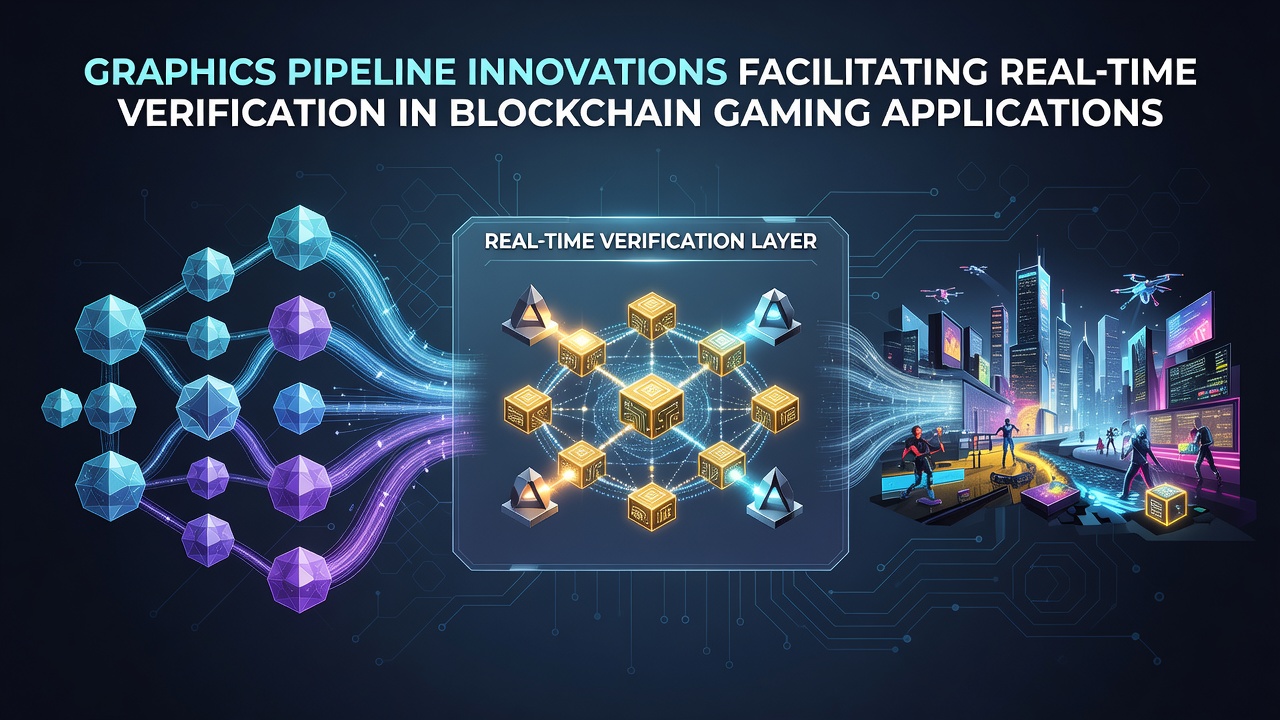
Graphics pipelines have evolved to handle complex rendering tasks while incorporating computational steps that support blockchain operations, and developers now integrate verification routines directly into shader stages so asset ownership checks occur without separate CPU handoffs. This integration allows games to confirm transaction validity on distributed ledgers during frame rendering cycles, and data flows between GPU cores and blockchain nodes maintain synchronization through optimized memory buffers that reduce latency to milliseconds.
Core Components of Modern Graphics Pipelines
Modern pipelines consist of vertex processing, rasterization, fragment shading, and output merging stages, yet recent extensions add parallel compute kernels that execute cryptographic hash calculations alongside texture sampling operations. Researchers at institutions across North America have documented how these kernels leverage existing SIMD units to process zero-knowledge proofs without disrupting draw calls, and the approach keeps frame rates stable even when thousands of players interact with tokenized items simultaneously.
Blockchain Verification Needs in Gaming Environments
Blockchain gaming applications require instant confirmation of asset provenance, ownership transfers, and smart contract states whenever players equip items or enter new zones, and traditional network polling creates noticeable delays that break immersion. Graphics hardware now offloads portions of these checks by treating verification data as additional vertex attributes streamed into the pipeline, and this method allows the GPU to validate signatures in parallel with geometry transformations rather than waiting for external API responses.
Key Innovations Driving Integration
One development involves custom instruction sets added to recent GPU architectures that accelerate elliptic curve operations common in blockchain protocols, and these instructions execute within the same clock cycles used for matrix multiplications during lighting calculations. Another advance comes from dynamic shader recompilation techniques that insert verification branches only when asset metadata flags indicate a blockchain-linked object, and this selective execution keeps overhead low across non-relevant draw calls. Industry reports from the Interactive Software Federation of Europe show that several studios adopted these methods in 2025, resulting in measurable reductions in round-trip times for ownership queries during live sessions.
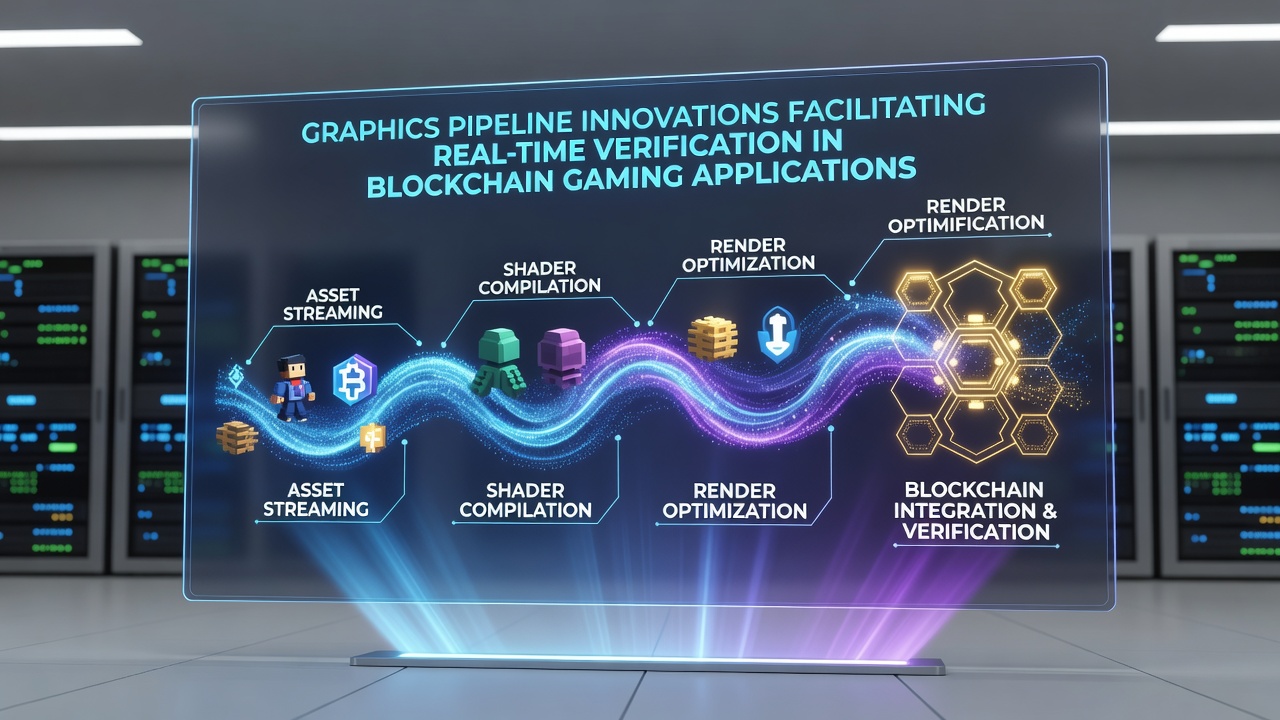
Memory hierarchy improvements also play a role because on-chip caches now retain frequently accessed ledger state fragments, and this retention eliminates repeated fetches from remote nodes while rendering continues uninterrupted. Developers have observed that combining these caches with asynchronous compute queues allows verification tasks to run in the background during vertical blanking intervals, and the result is verification that completes before the next frame buffer swap occurs.
Practical Implementations in Current Titles
Several multiplayer titles released in late 2025 demonstrate these techniques in action, where players trade in-game items backed by blockchain records and the graphics engine confirms each exchange before the visual transfer animation plays out. One studio in the Asia-Pacific region reported that pipeline-level verification handled over 40,000 concurrent asset checks per minute during peak hours without additional server load, and similar patterns appear in titles developed for consoles that support extended compute features. Data from the Australian Competition and Consumer Commission on digital marketplaces indicates rising adoption of such hybrid rendering and verification systems as publishers seek smoother player experiences.
Developments Expected Around November 2026
Upcoming hardware refreshes scheduled for November 2026 include wider support for dedicated blockchain acceleration blocks within graphics processors, and early test kits show these blocks can reduce verification latency by an additional 30 percent compared with current shader-based methods. Research groups at several European universities continue to publish findings on combining ray tracing workloads with proof-of-stake validation routines, and the work suggests future pipelines will treat ledger updates as another form of scene graph modification that integrates naturally with existing culling and sorting passes.
Conclusion
Graphics pipeline innovations continue to merge rendering efficiency with the demands of real-time blockchain verification, and the result is gaming applications that maintain visual fidelity while supporting secure asset interactions across distributed networks. Continued refinements in compute integration and memory management point toward broader implementation across platforms as hardware evolves through 2026 and beyond.